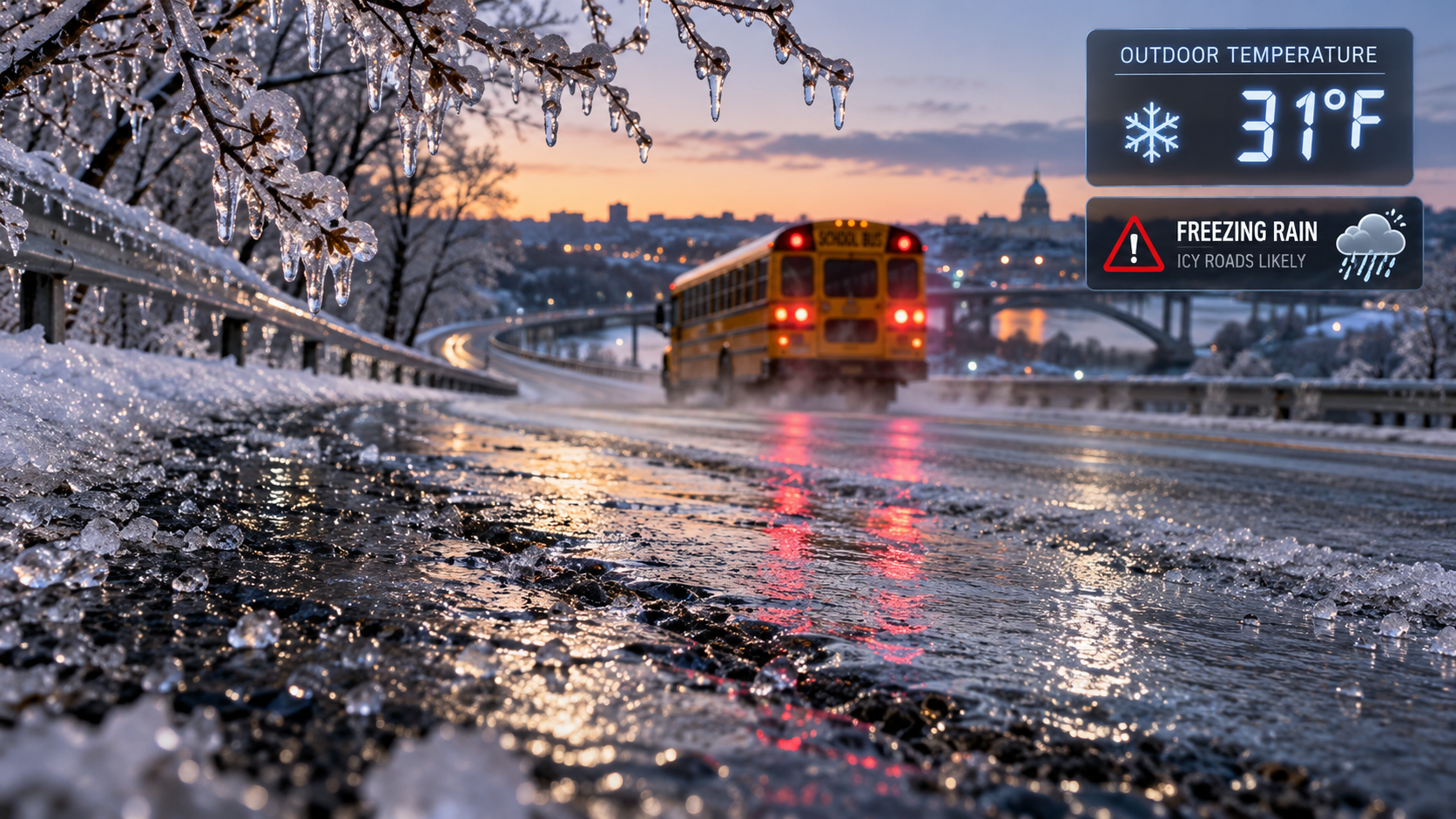
When winter weather warnings threaten your district, students and parents ask: can school be cancelled because of ice without snow? Specifically, many people assume deep snow drifts are required to trigger an official snow day.
However, freezing rain and black ice force school closures far more quickly than falling snow. In fact, even a thin layer of glaze ice on roads, bridges, and sidewalks destroys bus tire traction completely.
Today, modern weather systems alert administrators to icing risks early. Consequently, superintendents prioritize transit safety over snow depth when deciding whether to suspend classes.
Why Ice Causes School Cancellations Without Snow
First, understanding why ice forces school cancellations requires examining road friction and vehicle mechanics. School buses weigh between 10 and 14 tons. While heavy tires can cut through light snow to reach pavement beneath, solid glaze ice eliminates tire grip entirely.
Freezing Rain and Black Ice Formation on Bridges
Specifically, freezing rain occurs when supercooled liquid drops fall through a thin layer of sub-freezing air near the surface. According to National Weather Service forecasts, these liquid drops freeze instantly upon contact with cold roads, bridges, and sidewalks.
Because elevated bridges and overpasses lose heat from both above and below, they freeze much faster than regular pavement. As a result, hazardous black ice forms rapidly on highway overpasses before drivers or bus operators notice the danger.
Furthermore, research published in Nature Communications by DRI and UVM scientists demonstrates that weather models struggle when surface temperatures hover near 30°F to 34°F (1.0°C to 2.5°C). At near-freezing temperatures, liquid rain transitions into ice rapidly, creating sudden road hazards during the morning commute.
District Safety Protocols: Freezing Rain vs Snow Accumulation
In practice, school superintendents consult local road crews, emergency management, and tools like the NWS Hourly Weather Graph. Educational leaders must weigh mandatory academic schedule requirements against student transit safety.
| Atmospheric Ice Trigger | Administrative Action Protocol | Primary Safety Factor |
|---|---|---|
| Light Freezing Drizzle / Glaze | Immediate 2-Hour Delay or Closure | Black ice formation on bridges and outdoor sidewalks |
| Freezing Rain Advisory | Full School Cancellation | Complete loss of bus traction and downed tree limbs |
| Sub-Freezing Morning Refreeze | 2-Hour Delay or Early Dismissal | Melting snow refreezing into solid ice during bus runs |
| Sleet / Ice Pellets | Plowing Dispatched & Delay Likely | Hard packed ice slush clogging neighborhood streets |
Municipal Anti-Icing Pre-Treatment and Limits
For example, municipal snow policies like the City of Red Wing Snow & Ice Control Policy outline applying liquid salt brine 1 to 2 days before a storm. Specifically, this anti-icing treatment prevents ice from bonding to asphalt.
However, heavy freezing rain washes liquid salt brine off the pavement. When rain washes salt away before temperatures drop, roads freeze into dangerous sheets of black ice.
Similarly, guidelines from DC Public Schools Inclement Weather Guidance indicate that Mayor and district officials evaluate temperature, freezing rain forecasts, public transit, and storm timing. When ice threatens morning transit, full closures or 2-hour delays protect walking students and bus drivers.
Step-by-Step Protocol: Can School Be Cancelled Because of Ice in Your District?
To evaluate whether an upcoming ice storm will close your school, follow this 4-step diagnostic checklist:
Evaluating Surface Temperatures and Precipitation Types
- Check Ground and Air Temperatures: First, monitor surface temperatures around 4:00 AM. When surface pavement drops below 32°F during liquid rainfall, black ice forms immediately on untreated roads.
- Identify Elevated Overpass and Sidewalk Risks: Second, evaluate walking routes and bridge crossings. National Weather Service advisories warn that even light freezing rain creates severe hazards on sidewalks, outdoor stairs, and bus stops.
Auditing Road Salt Brine and Storm Timing
- Audit Pre-Storm Liquid Salt Brine Application: Third, check if local road crews applied liquid anti-icing brine. If heavy rain falls before freezing, it washes away road salt, leaving asphalt vulnerable to black ice.
- Analyze Morning Commute Window Timing: Fourth, assess when freezing rain begins. If ice arrives between 3:00 AM and 6:00 AM, road crews cannot treat secondary neighborhood streets before morning bus runs. Consequently, this timing significantly increases school cancellation odds.
Frequently Asked Questions: Can School Be Cancelled Because of Ice?
Can school be cancelled because of ice without snow?
Yes, absolutely. Freezing rain and black ice destroy vehicle tire traction. Consequently, superintendents frequently cancel school for ice hazards even when zero snow accumulation is present.
Is black ice worse for school buses than heavy snow?
Yes, black ice is far more dangerous. Heavy school bus tires can cut through light snow to gain traction. In contrast, black ice creates a frictionless surface that causes multi-ton buses to slide uncontrollably.
What temperature causes school cancellations for ice?
When air and road surface temperatures drop to 31°F or lower during rainfall, liquid water freezes instantly on pavement. Therefore, near-freezing rain forecasts trigger immediate closure warnings.
Why do schools close for freezing rain but stay open for snow?
Snow can be plowed and salted quickly by municipal crews. Conversely, freezing rain washes salt off roads and freezes continuously, making clearing operations almost impossible during the morning commute.
Conclusion: Prioritizing Road Safety Over Snow Depth
Overall, asking can school be cancelled because of ice shows that dangerous road conditions depend on surface friction rather than snow depth. Freezing rain, black ice, and untreated overpasses create hazardous travel conditions that force superintendents to close facilities.
In summary, predictive algorithms evaluate live weather advisories, surface temperatures, and storm timing to calculate reliable probability scores.
For optimal planning, check prediction scores the evening before a winter storm, re-verify updated forecast data in the morning, and always confirm official schedule changes through your school district alerts.